📝 Unverified Diaries Are Not Evidence: CESTAT Quashes ₹2.16 Cr Excise Demand — A Lesson for All Taxpayers
- Bhagya Lakshmi
- Jul 17
- 3 min read

🚨 Background
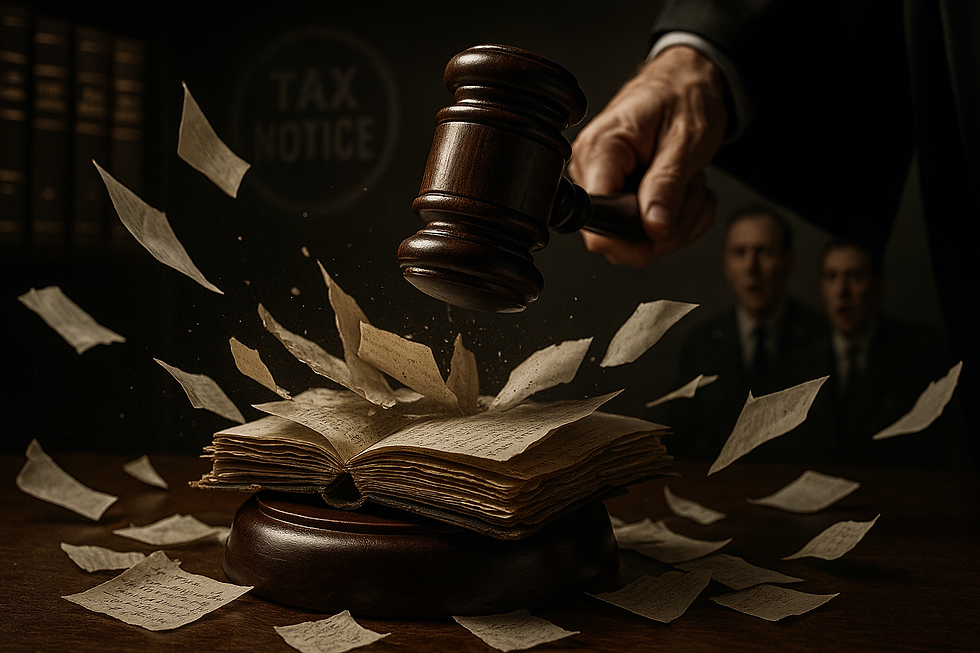
In a significant ruling, the CESTAT Kolkata Bench quashed a ₹2.16 crore central excise demand raised against Akshaya Steel Works Pvt. Ltd., holding that pencil-written, unverified diaries and loose sheets seized during a departmental search cannot form the sole basis for demanding duty.
This case is a classic example of how mere suspicion, unsupported by proper corroboration, cannot lead to valid tax proceedings—whether under Excise, GST, or Income Tax.
⚖️ Case Summary: Akshaya Steel Works Pvt. Ltd. vs. Revenue
Authority: CESTAT Kolkata
Issue: Clandestine removal of finished goods allegedly inferred from private diaries
Period Involved: Feb–Dec 2008 and March 2009
SCN Issued: 20-12-2012
Demand: ₹2.16 crore excise duty
Basis: Diaries and loose sheets seized in 2009
🚫 Why CESTAT Quashed the Demand:
Delayed Statements
Statements of the director were recorded almost 3 years after the search.
The tribunal ruled this could not be treated as "continuing investigation."
Evidence Unreliable
Diaries merely contained raw material details—not actual clearance or sale of goods.
No corroborative evidence like stock registers, invoices, or transporter records.
Limitation Period Violated
SCN issued in 2012 despite knowledge by 2010 = time-barred.
Section 9D Not Followed
Revenue did not examine the person who wrote the diaries under Section 9D of Central Excise Act—making the evidence inadmissible.
🔍 📚 Similar Rulings Under Income Tax Act
1. Common Cause (A Registered Society) vs. Union of India [(2017) 394 ITR 220 (SC)]
Held: Loose papers found in raids (Sahara diaries) have no evidentiary value unless backed by independent verification.
Supreme Court rejected their use for reopening assessments.
2. CIT vs. Chetan Das Lachman Das [(2012) 254 CTR 392 (Del HC)]
Loose sheets seized during search—without corroborating books or entries—were held inadmissible for additions under Section 68 or 69.
3. CIT vs. Satnam Singh Chhabra [(2014) 47 taxmann.com 387 (Del)]
Held: Merely finding handwritten notes in search does not amount to real income unless proved via independent evidence.
🧾 Relevant GST Case Laws
1. Siddhi Vinayak Trading Company vs. State of UP
Allahabad HC quashed GST demand based on MS Excel sheets found on laptop without proof of actual supply.
2. Keshav Traders vs. State of MP
GST authorities made additions based on mobile messages and diary notes—MP HC quashed the order citing lack of cross-examination and verification.
3. Jay Shree Enterprises vs. Union of India
Gujarat HC ruled that statements recorded without Section 70 summons or opportunity for cross-examination cannot be the sole basis for GST liability.
🧠 Key Takeaways for Taxpayers
✅ Maintain Proper Books: Avoid informal records or personal notes that can be misinterpreted.
✅ Diaries ≠ Proof: Uncorroborated, handwritten documents are not legally tenable.✅ Timely Action by Department: Delays in issuing SCNs or recording statements can render the case invalid.
✅ Demand Must Be Based on Clear Evidence: Tax liabilities must be backed by tangible, verifiable data—not guesswork.
💡 Practical Tip
If your business faces tax scrutiny and the department relies on loose documents, unsigned papers, or old handwritten records, insist on cross-examination, verification, and demand compliance with relevant evidentiary rules (like Section 9D for Excise or Section 132(4) for Income Tax).
🔚 Conclusion
This CESTAT decision is a reaffirmation of the judicial principle that “justice must be based on proof, not presumption.” Tax authorities must base their findings on credible, admissible evidence—not scribbled notes in personal diaries. Whether under Excise, GST, or Income Tax, unverified documents alone can’t determine tax liability.


Comments